Monthly Media: January 2026
Trying a new journalling style: a once-a-month log, mostly for my own benefit. This month's recommendations: Lev Grossman's "The Bright Sword", Mindzero's "The Four Wishes", and Inkle's TR-49.

Trying a new journalling style: a once-a-month log, mostly for my own benefit.
Books
I read five books in January:
- Francis Spufford's Cahokia Jazz, a noir detective story from an alternate timeline of greater Native American survival and US fragmentation. It's simultaneously quite well written—Spufford's historical "what ifs" are interesting and nuanced—but it is a curious tale for a British author to have told. It is a pretty great noir, though.
- Robert Jackson Bennett's The Tainted Cup, a promising debut novel in a series of high-fantasy detective stories involving a sort of "Nero Wolfe-ian" premise: the gruff, grumpy stay-at-home genius with a young, friendly faced assistant who does the gruntwork. I enjoyed this; RJB seems to have dialed back the exposition-o-meter, which I greatly appreciate.
- Philip Mason's Rum Running and the Roaring Twenties: Prohibition on the Michigan-Ontario Waterway. This was a fun, fast, lightweight local history about the doomed prohibition effort—an overwhelming percentage of all illegally imported alcohol during the period flowed through Michigan. I learned much about the local lore: expect anecdotes at cocktail parties ;).
- Lev Grossman's The Bright Sword, a delightful retelling of the Arthur legends. The "matter of Britain" was a childhood favorite (and later academic interest!) of mine, so I quite appreciated this post-Camlann continuation of the saga, updated for the modern era, as each previous continuation updated it for their own. The main thing this inspired was the kernel for a role-playing game... about which more later (hopefully! I say that a lot!).
- The Mengzi, translated by Bryan van den Norten. I had some grounding in Daoist thought (Laozi, Chuangzi), a rudimentary reading of Kongzi's Analects, and Han Fei's Legalism, but Mohism and the later developers of Confucianism such as Mengzi and Xunzi were, in retrospect, a glaring deficiency in my familiarity with the classics of Chinese philosophy. I greatly appreciated Van Norden's inclusions of salient commentary from classical Chinese commentators as well as a little bit of his own commentary—mostly in contextualizing the dialogues—on the work.
TV & Movies
My wife and I have decided that we're going to take a definitive and complete tour of Wes Anderson's filmography this year—a filmmaker we both like—and we set about that in earnest: The Darjeeling Limited, Fantastic Mr. Fox, The Life Aquatic with Steve Zissou, and Moonrise Kingdom, the latter two of which we'd not seen before somehow. It's been a delight to watch the evolution of both his themes and style. Expect more writing on this topic... later :).
I can also heartily recommend a new, independently produced clone of The Genius called Four Wishes (네 가지 소원), which is getting official subtitles on a weekly basis. It reportedly cost $50,000 to make, stars normal folks rather than celebrities and yet: the creators seem to understand what it is that made The Genius tick: it is edited together to tell a story about the gameplay. Is it as polished as The Genius or Game of Blood? No! The cast are normal people and it is obviously on a tight budget. But is this really fun so far and punching above its budget? Absolutely. This is a better offering than the recent UK clone.
Video Games
The Steam Deck continues to be an absolute godsend for playing games. I somehow played three in January, all of them strong recommendations:
- The Drifter, from Powerhoof games. This is a dynamic point-and-click adventure game underpinned by a modern game engine that challenges the player to come up with more complex real-time action sequences than is usual in the genre. I won't spoil anything about the narrative other than that it is a cerebral and emotional science fiction story about the lengths we can be tempted to by grief and shame.
- Inkle's TR-49. This is a fantastic little narrative puzzle/thinky game about trying to reconstruct and discover both links between and the contents of esoteric books in an alternate-universe 1940s-era database system. I went in knowing nothing about it (but trusting, because inkle has been tremendous so far), and safe to say it more than met my expectations. I will only say that it becomes, I think, delightfully and hauntingly relevant.
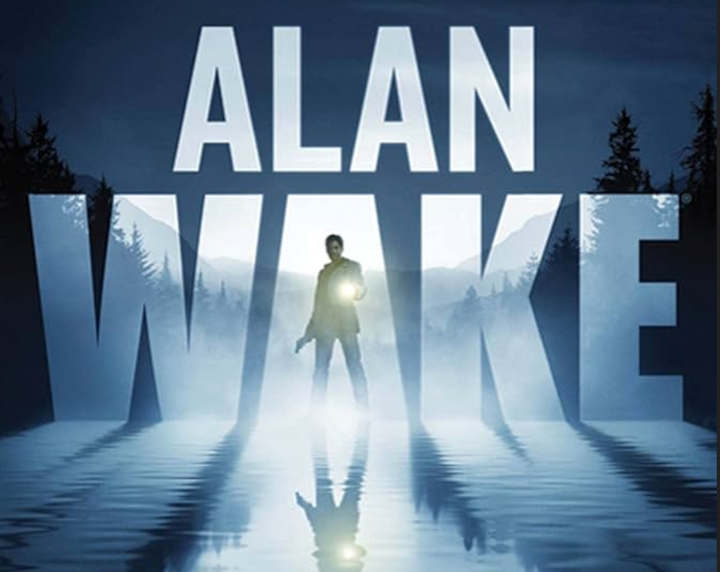
And a long-planned replay of 2010's Alan Wake, about which I have a fair amount to say, anon.


Comments ()